
Y Bont (The Bridge) was created by Jonah Jones for Coleg Harlech in 1969–70 from around 800 pieces of Carrara marble and Welsh slate.
The Welsh mythology that inspired Jonah
As his starting point for Y Bont, Jonah took the second branch of the Mabinogi, ‘Branwen Ferch Llŷr’ (Branwen Daughter of Llyr) – a story concerned with self-sacrifice and duty to the common good.
At the heart of the central section of the sculpture, a bridge form straddled a gap. It symbolised the words of the giant Bendigeidfran, king of Britain, when his expedition to Ireland to rescue his calumniated sister Branwen reached the Shannon: Avo Penn Bid Pont (he who is chief, let him be a bridge). Bendigeidfran lay across the river and his army passed over him.
The symbology of ‘Y Bont’
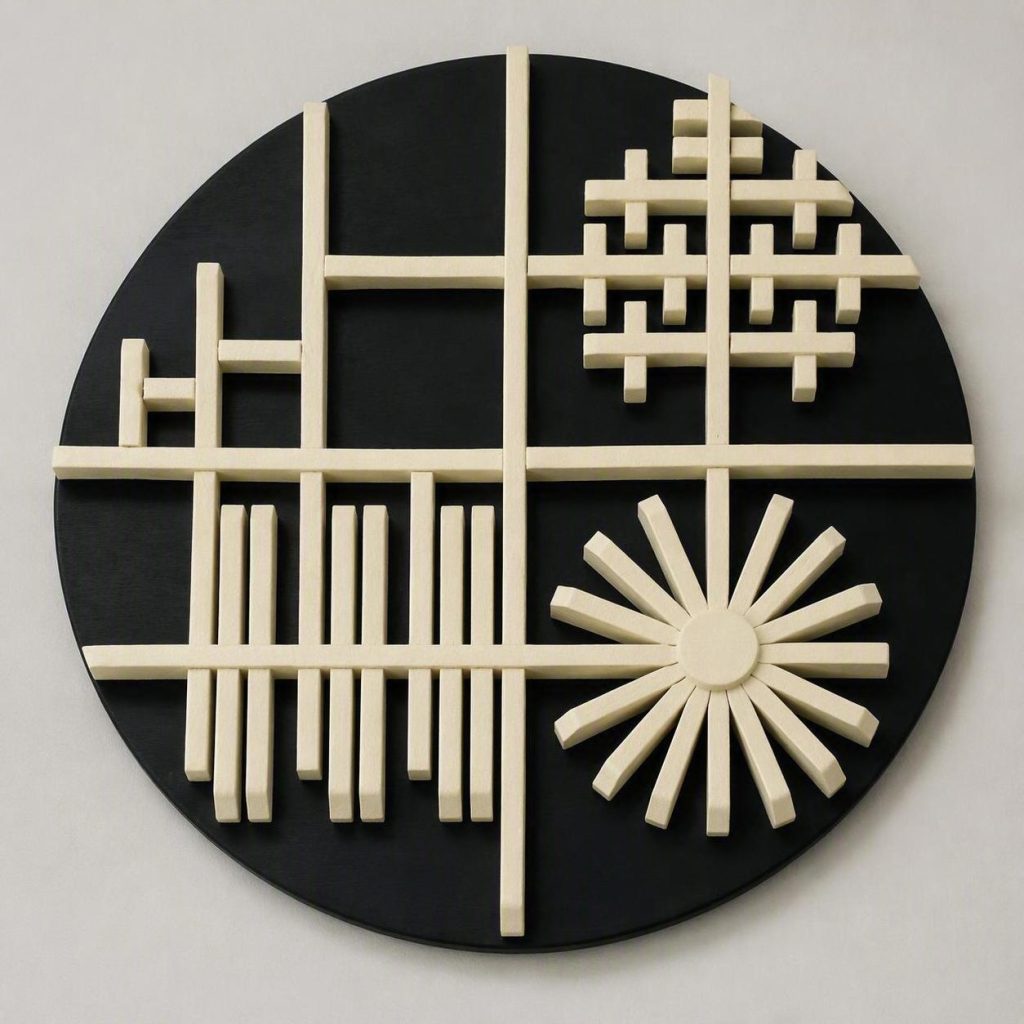
The sculpture celebrated education as a means of achieving harmony between nature and humanity. Y Bont was a visual puzzle full of layers of meaning and symbolism. In two halves, with a bridge form straddling the gap at the heart of the central section, it contrasted the works of nature with those of humanity.
Organic, natural-seeming shapes sat to the left, such as flowing waves, a sun, a half-moon, a bird’s wings and a fishbone.
More formal human-made patterns sat to the right, like a sonnet form, and a mandala whose quadrants included a letter H (for Home, Happiness, the Welsh Hiraeth, probably also Harlech) and a musical form representing the opening theme of Mozart’s Symphony No. 40 in G minor.
The mandala itself has long symbolised humanity’s search for unity.
Jonah’s influences and creative methods
In the late 1960s, when Jonah created Y Bont, his influences included Henry Moore, Barbara Hepworth, Constantin Brancusi and Isamu Noguchi. Jonah felt he had progressed from “the overstatement, elaboration and emotive overtones of youth to… implosive simplicity.”
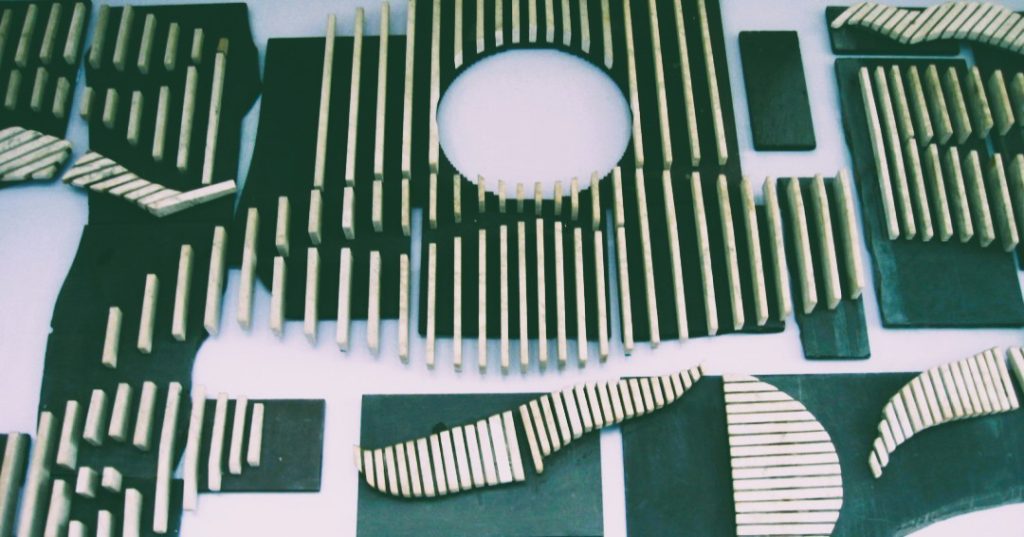
For Y Bont, Jonah used a radial saw to slice and saw the slate into panels, which were mainly straight edged but with a few rough cut, mostly of blue slate but with the odd smaller piece of green-veined purple slate. He built the sculpture up, laying the slate panels down rather like stepping stones. On these panels he superimposed strips of grey-veined white marble, of different lengths and thickness.
Jonah’s tools and techniques

Photograph: Geoff Charles/National Library of Wales/Wikipedia Commons
The photo, taken around 1972, shows Jonah in his workshop at the Porthmadog terrazzo tile works. The radial saw in the background, used by the terrazzo factory workers to cut tiles, became an important tool for Jonah in the late 1960s and early ’70s. He used it to slice and saw Welsh slate and Carrara marble for his sculptures, like the one he is working on in the photo, Y Flwyddyn (The Year).
For Y Bont he used the same processes for each of the 800-plus strips of marble and slate. Weighing several tons, the whole thing was held together with steel pins and epoxy resin.
Did Coleg Harlech students use ‘Y Bont’ as a climbing frame?
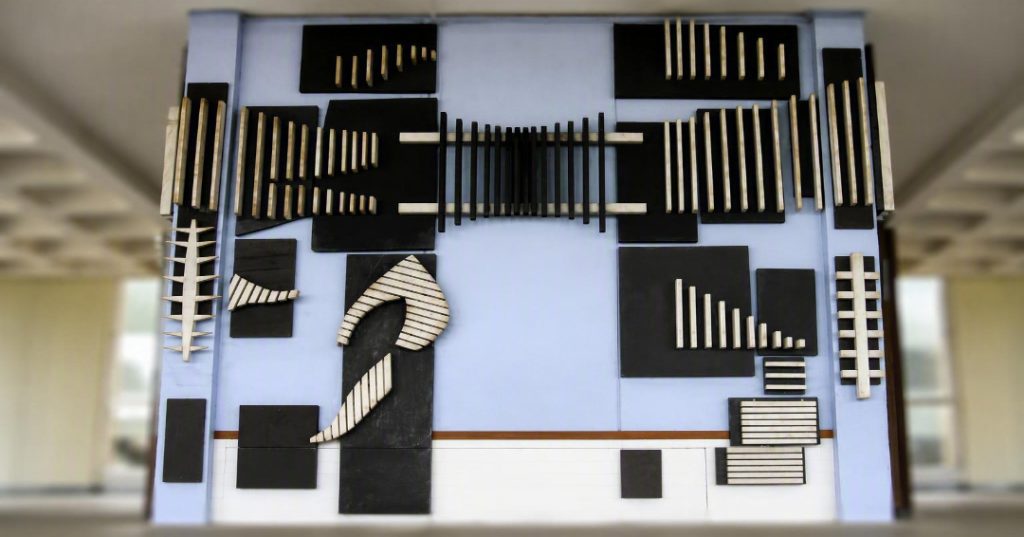
We couldn’t possibly comment on that old story! But we’re guessing that Jonah had already thought this might happen when he designed the sculpture with a bottom row of massive rough-cut slates to protect the more delicate higher-up elements. Although visually part of his original design, these lower slates are dispensable and would be omitted from our proposed abridged version.
‘Y Bont’ on TV in ‘Hidden Histories’
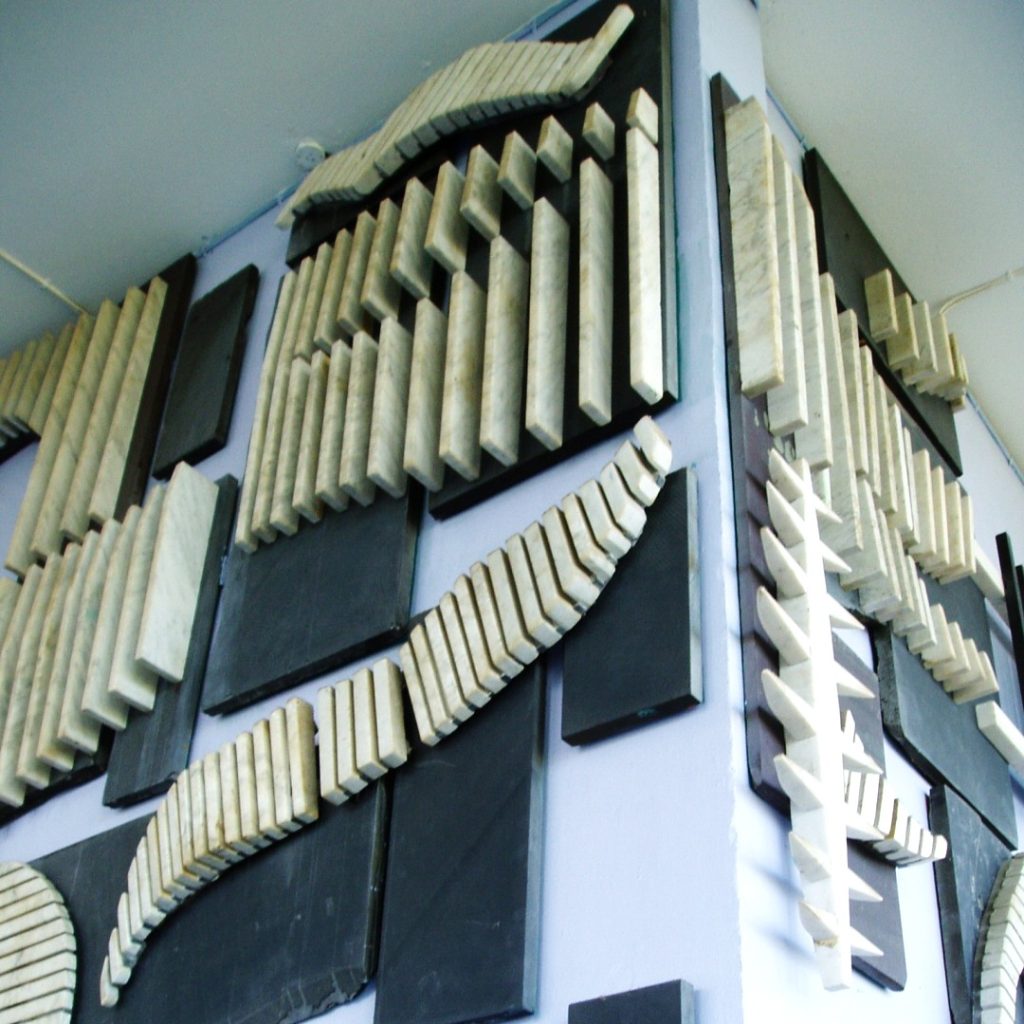
Photograph: Meic Watts
BBC Cymru Wales included a 10-minute feature about Y Bont in the 17 November 2009 episode of its ‘Hidden Histories’ series on BBC Two Wales.
Produced by Element Productions in association with the Royal Commission on the Ancient and Historical Monuments of Wales (RCAHMW), the film was mostly shot in the refectory of the already abandoned students block, with Jonah’s daughter Naomi Trodden and the RCAHMW’s Secretary Peter Wakelin exploring the conception and design of ‘Y Bont’.
Here’s a link to the film: https://www.youtube.com/watch?v=DriEoPmUvEk
A new CGI animation
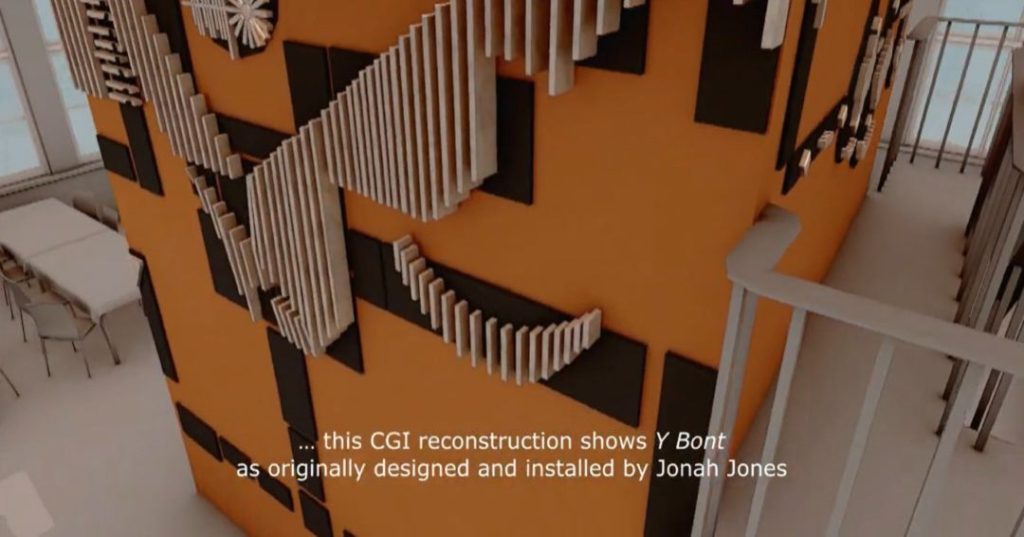
As recorded in the 2009 ‘Hidden Histories’ film about Y Bont, a permanent digital record of the sculpture was made by the RCAHMW on site in Coleg Harlech. From this they then produced a dramatic 2-minute CGI visualisation of the sculpture.
Recently we adapted and expanded the original RCAHMW CGI. Our revised video adds captions, music, and a whole extra section about our proposed abridged version of Y Bont in what we hope will become its future new home – ‘somewhere in Wales’…
Here’s a link to the new CGI: https://www.youtube.com/watch?v=cGN7ithjrKg&list=TLPQMjIwOTIwMjaVyeWNjpNzvw&index=2
In the custody of Scene & Word
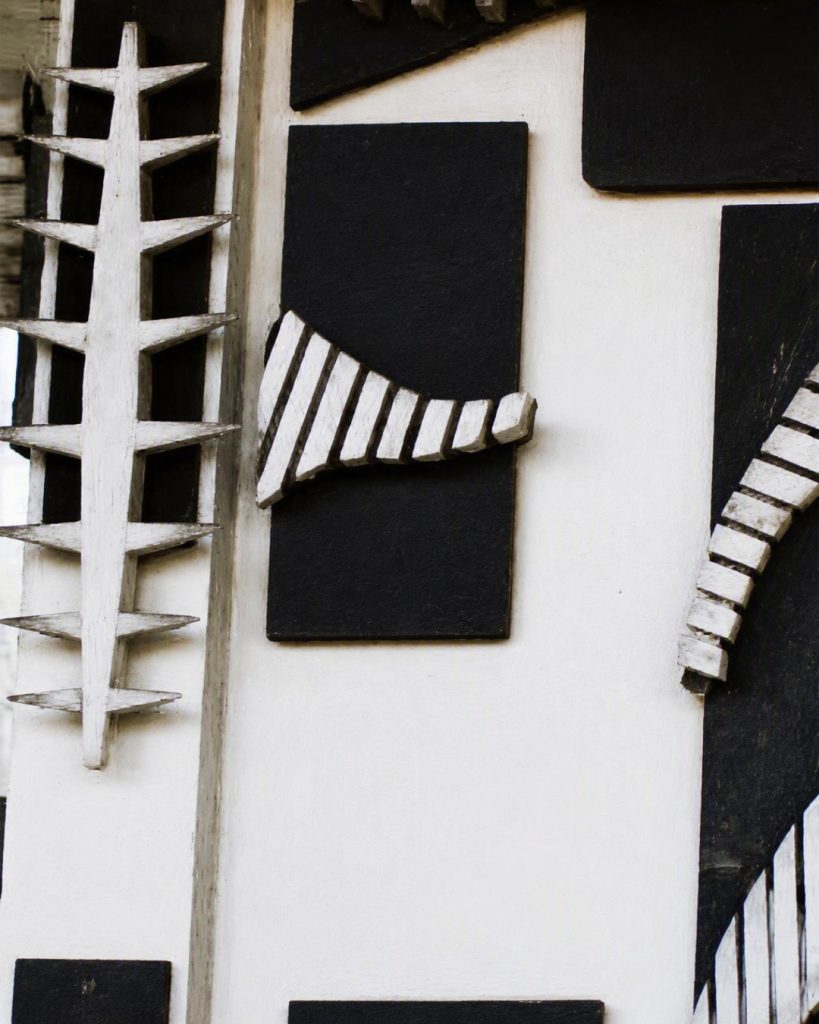
Closely linked with the Workers’ Educational Association (WEA), Coleg Harlech was Wales’ only long-term, mature-student residential education college, established in 1927. From 1968 onwards accommodation for students was provided in a 12-storey Brutalist tower block, known locally as the ‘Leningrad Hilton’. The student refectory on the ninth floor housed Y Bont, wrapped around a lift shaft.
By 2008 the need for student accommodation had declined to the point where the tower block was vacated. It rapidly fell into disrepair and became difficult to secure from vandalism.
Fearing for the sculpture’s survival, we contacted the WEA, which by now had merged into Adult Learning Wales (ALW: Addysg Oedolion Cymru). In 2012 Coleg Harlech, on behalf of ALW, appointed Scene & Word as custodians of Y Bont, responsible for trying to find a new home for the sculpture ‘elsewhere in Wales’.
Rescued from destruction
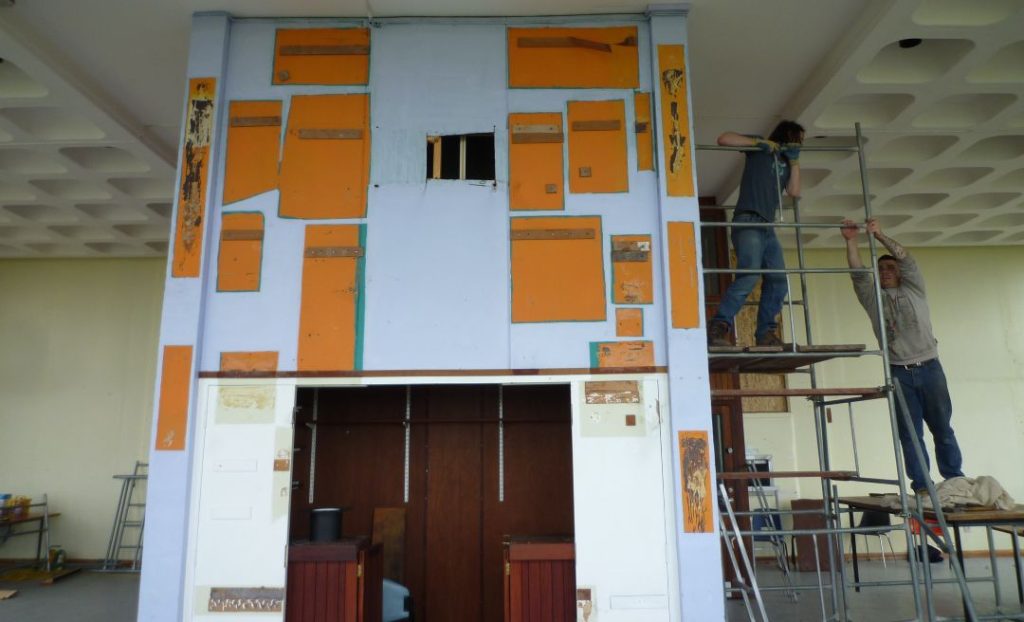
Photograph: Alun Adams
The agreement by ALW to make Scene & Word responsible for the future of Y Bont included a fund to cover the costs of removing the sculpture from the tower block. By now this was urgent because of the worsening condition of the building and the ever-present threat from vandals.
With the ALW funding we were able to send in an expert team from Swansea Metropolitan University (known now as University of Wales Trinity Saint David). Leading the team was the conservation expert Alun Adams, a Scene & Word director. Our consultant was the sculptor Meic Watts, who from 1988–91 shared a studio with Jonah and was familiar with the structural methods underpinning the piece.
Over the weekend of 23–24 June 2012 the sculpture was dismantled. Each section was numbered against Alun’s pre-prepared drawing and carried down – by hand! – to the bottom of the building for storage outside in a secure container. Later it was packed onto a truck for the final leg of its journey from Harlech to Lampeter, where it was put into save storage on the university campus.
‘Y Bont’ and its siblings…
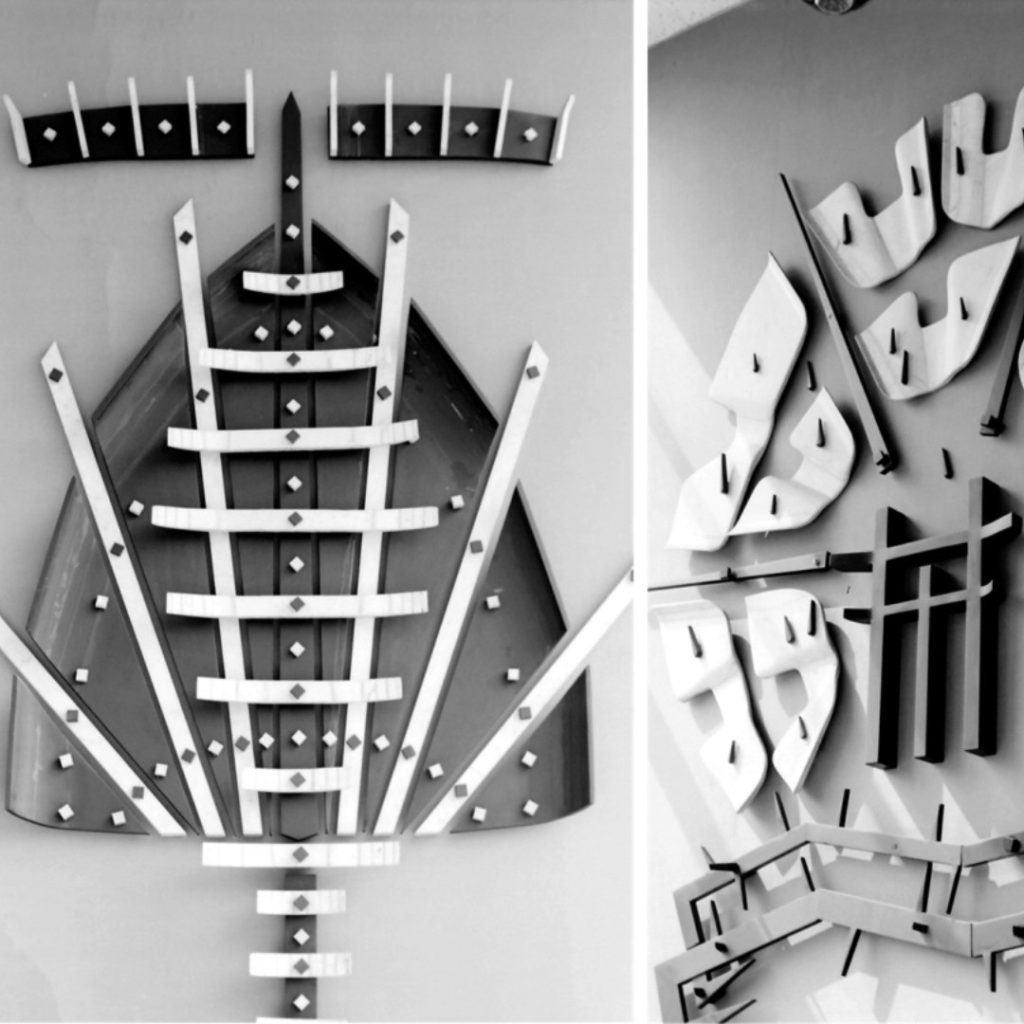
Justice and Mercy (detail) at Mold Justice Centre.

Y Bont, formerly at Coleg Harlech. Photograph: Robert Greetham.
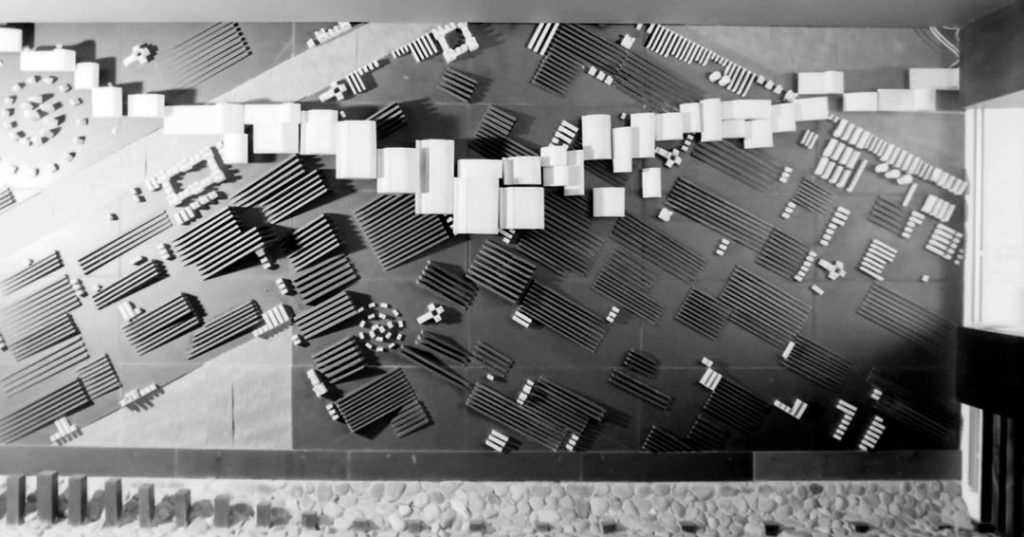
Hedd Dros Wynedd, formerly at North Wales Police headquarters, Colwyn Bay. Photograph: Robert Greetham.
Between 1968 and 1972 Jonah received commissions for three large public wall sculptures in sawn slate and marble. The first is still in active public service, the second survives only in pieces, and the third is long gone.
First of its kind, and smallest of the three, was a wall sculpture in blue slate and white marble for what is now called the Mold Justice Centre: in fact, two separate pieces, named Justice and Mercy. The former is based on an upturned shield in slate – a traditional Celtic sign of peace – while the latter is based on explicitly Christian symbols. The centre was completely refurbished in 2010, and the sculptures were restored to their former prominence. More information can be found in Oriel Jonah Jones.
Last of the three was Hedd Dros Wynedd (Peace Over Gwynedd), commissioned for the foyer of the police HQ in Colwyn Bay. A stylised map of North Wales in slate and marble, it evoked the peacefulness of the cloud-dappled Welsh hills, in contrast with the troubles in Northern Ireland that Jonah witnessed when assessing at Belfast College of Art. In 2002, when the police HQ was being refurbished, the contractors demolished and discarded the entire sculpture, without any consultation. Again, there’s more information in Oriel Jonah Jones.
In between the two, Y Bont was the largest and arguably the pinnacle of Jonah’s public sculpture. In recent years much time and effort has gone into rescuing and preserving this great piece, which deserves much better than to be locked away in storage or suffer the fate of its fellow sculpture in Colwyn Bay.
DO YOU KNOW OF ANY INDOOR SPACE WITHIN WALES THAT COULD OFFER AN EMPTY WALL (ABOUT 6.2 m x 2.4 m) TO PUT UP AN ABRIDGED VERSION OF Y BONT? …OR EVEN A LARGER WALL THAT COULD ACCOMMODATE MORE OF THE ORIGINAL SCULPTURE?
Our email is contact@sceneandword.org.