

My workflow often weaves between the analogue and digital, combining and interchanging media multiple times in the process of making each of my pieces. My ideas are often something that only comes with putting pen to paper, likely due to a drilled-in sketchbook practice that underpinned my foundation year in Coleg Menai. From here, I often use software such as Adobe Capture to digitise my drawings, that I can then expand digitally, animate or make into something new. Recently, I have been spending a lot of time in ‘Maker Spaces’ experimenting with technology such as vinyl and laser cutters and have fallen in love with this as a means of breathing new life into my drawings. In my first blog post, I spoke of my awakening to craft-based methods at university both providing formative lessons that inform digital work and leading to my first discovery of Jonah Jones’ work. With this in mind, it seemed like Maker Space was a great place to start my experimentation.
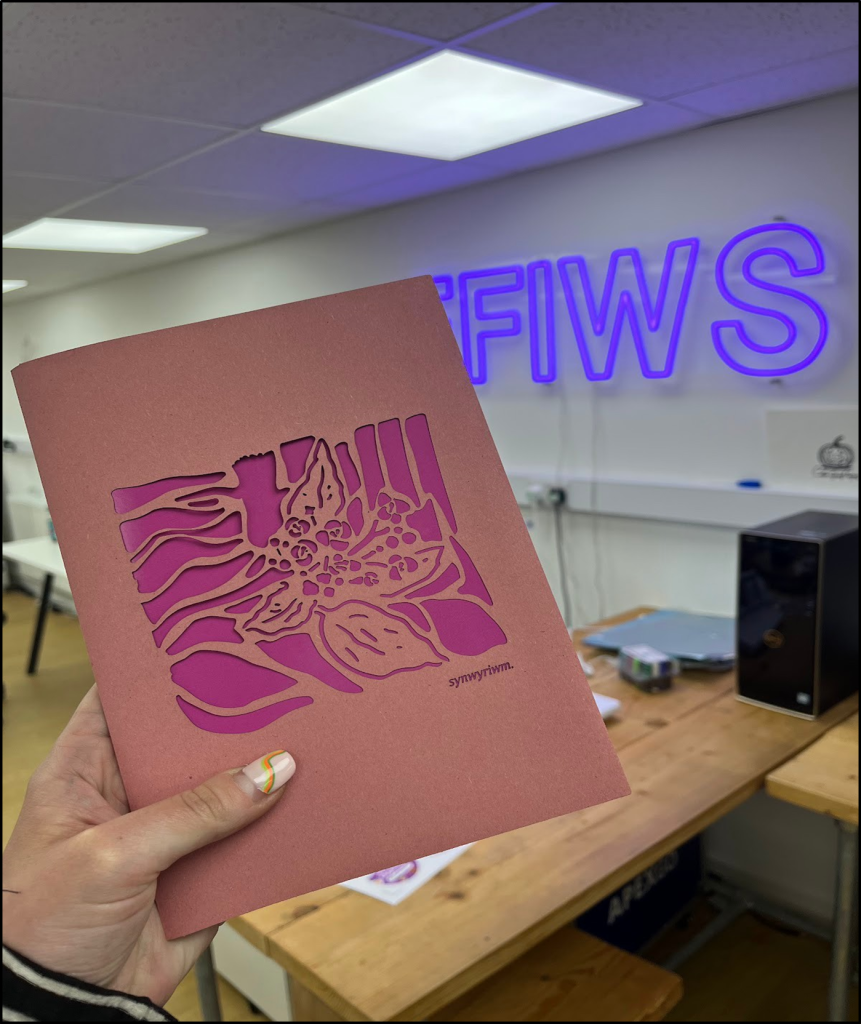
Recent Maker Space experiments include this new book cover for a zine of mine, laser-cut at FFIWS Porthmadog. This design started its life as a sketchbook doodle, which was scanned with Adobe Capture and laser-cut into paper.
Though the Scene & Word archive wasn’t short on inspiration, I couldn’t resist starting with the first piece of Jonah Jones’ work that I fell in love with: his beautiful hand-lettered alphabet. I scanned the piece with Adobe Capture and was left with a beautiful, clean vector to work with. This will be one of many pieces of Jonah Jones’ work that we will look to for reference during the workshops.
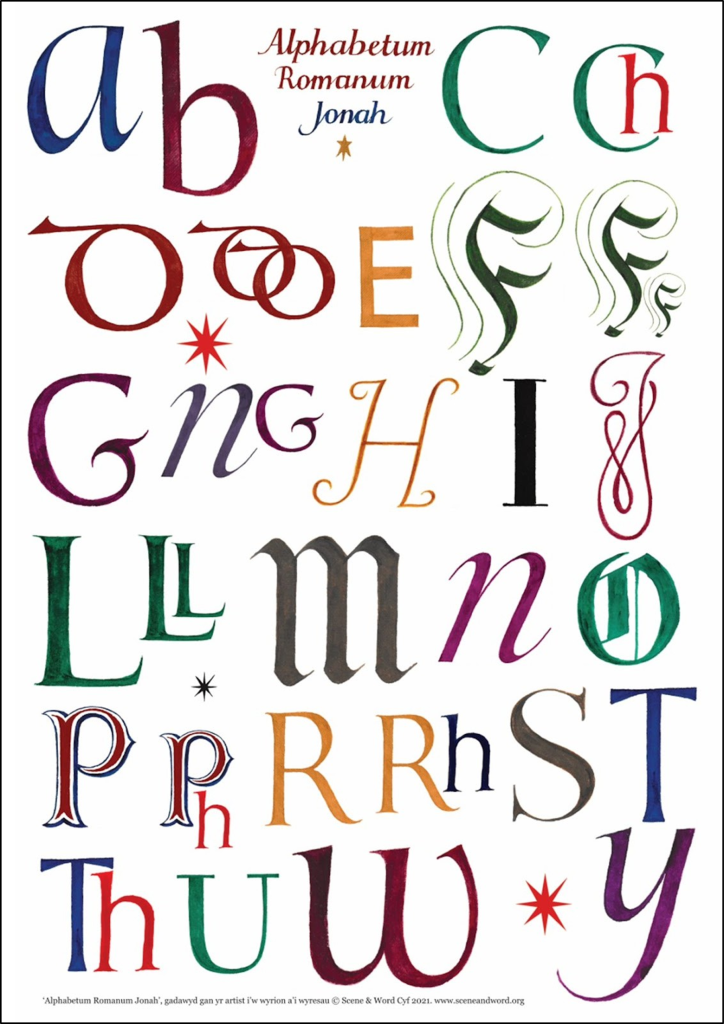
My inspiration: ‘Alphabetum Romanum Jonah’.

‘Alphabetum Romanum Jonah’ as a scanned vector.
Armed with my vector file, I booked a slot at FFIWS Caernarfon, a new Maker Space with a hoard of shiny new equipment to experiment with and enjoy!
Looking at the original lettering, so beautiful, ornate and hand-drawn, I was curious to see how a synthetic and modern material, such as vinyl, would apply. In addition, one may see vinyl-cutting as the evolution of the traditional letter-cutting so prevalent in Jonah Jones’ work. The piece cut wonderfully on the vinyl cutter, providing gorgeous, detailed, shiny green letters.

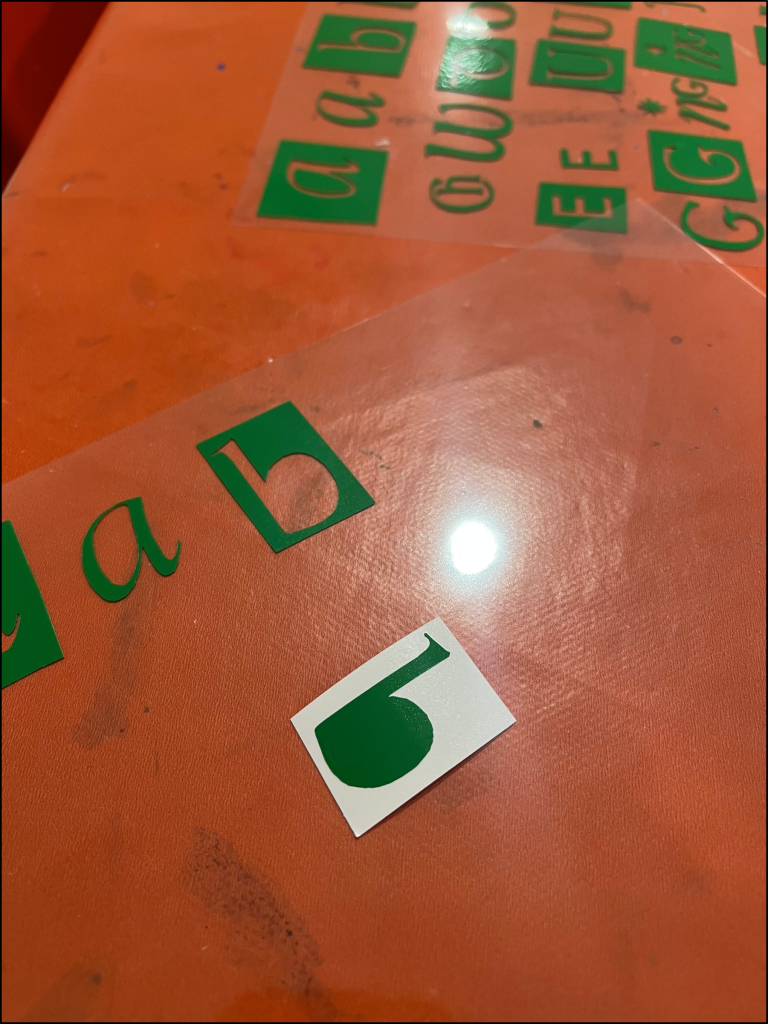
Cutting and ‘weeding’ the vinyl.
With the letters cut, I was ready for my next stage of experimentation. I transferred the letters onto acetate and began my research into participatory processes that would be engaging and fun for participants.

Inspired by the combination of analogue and digital methods underpinning my work, I looked into analogue photography methods. I was inspired by the instantaneous nature of the cyanotype process: working with light-sensitive paper. My first experiments came out beautifully despite the overcast day. I love the way Jones’ lettering looks with the beautiful limited colour palette of the light-sensitive paper.
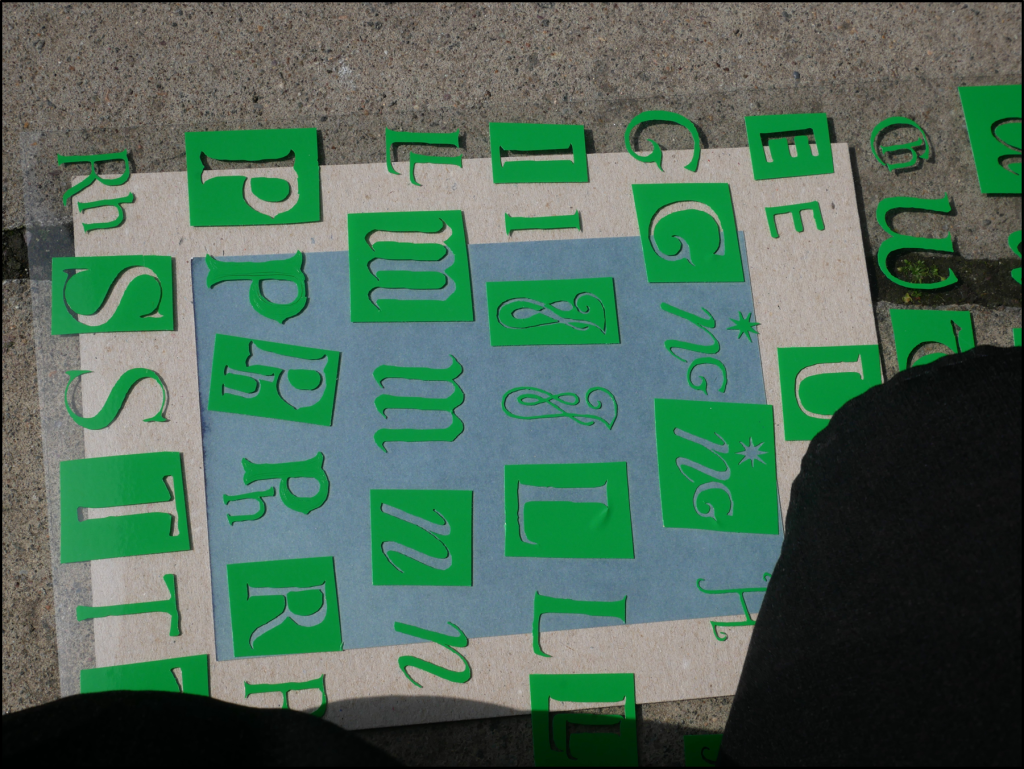
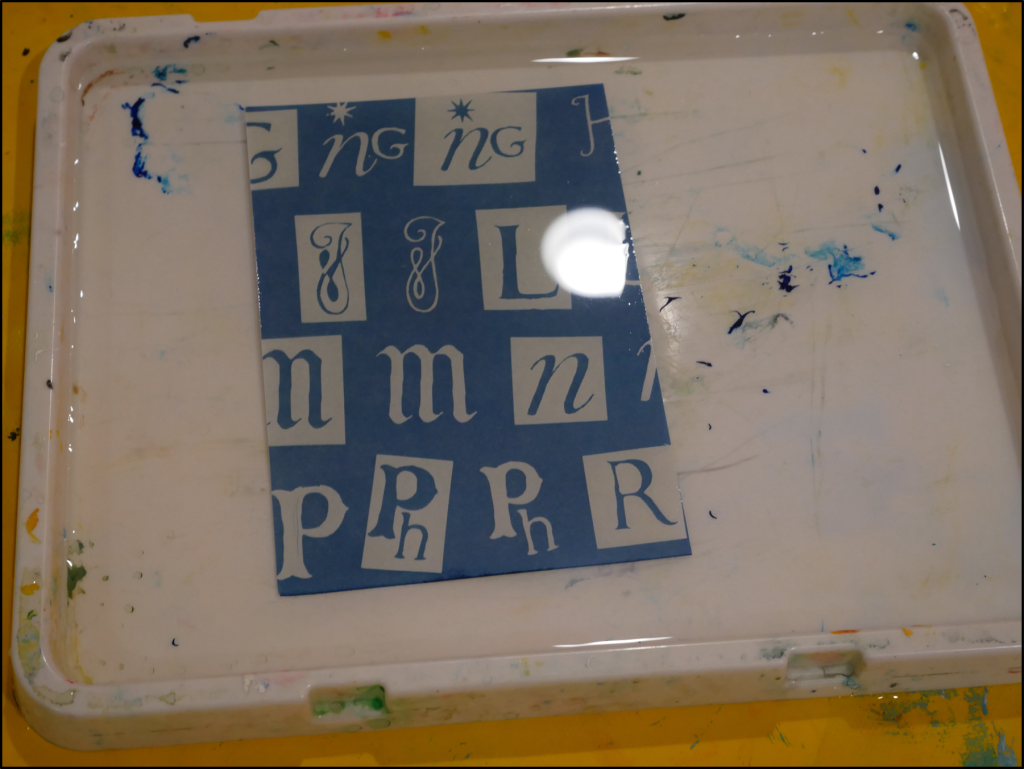
The process: I layered my acetate and letters onto light-sensitive paper and exposed them to sunlight for a few minutes before rinsing the paper in water.
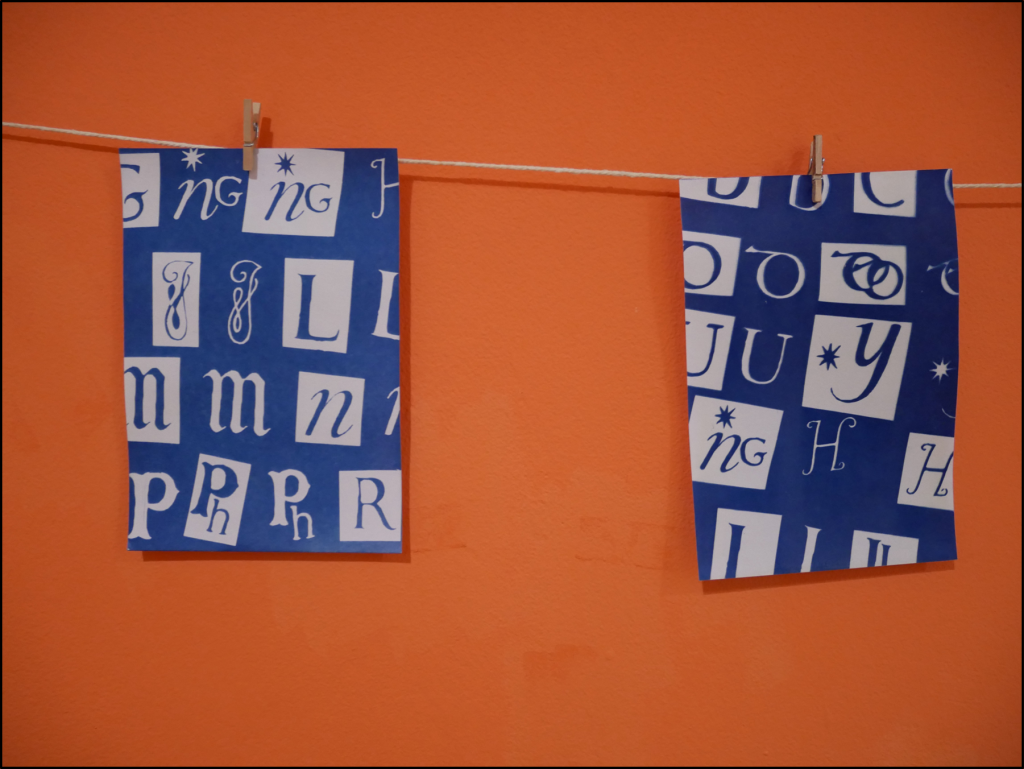

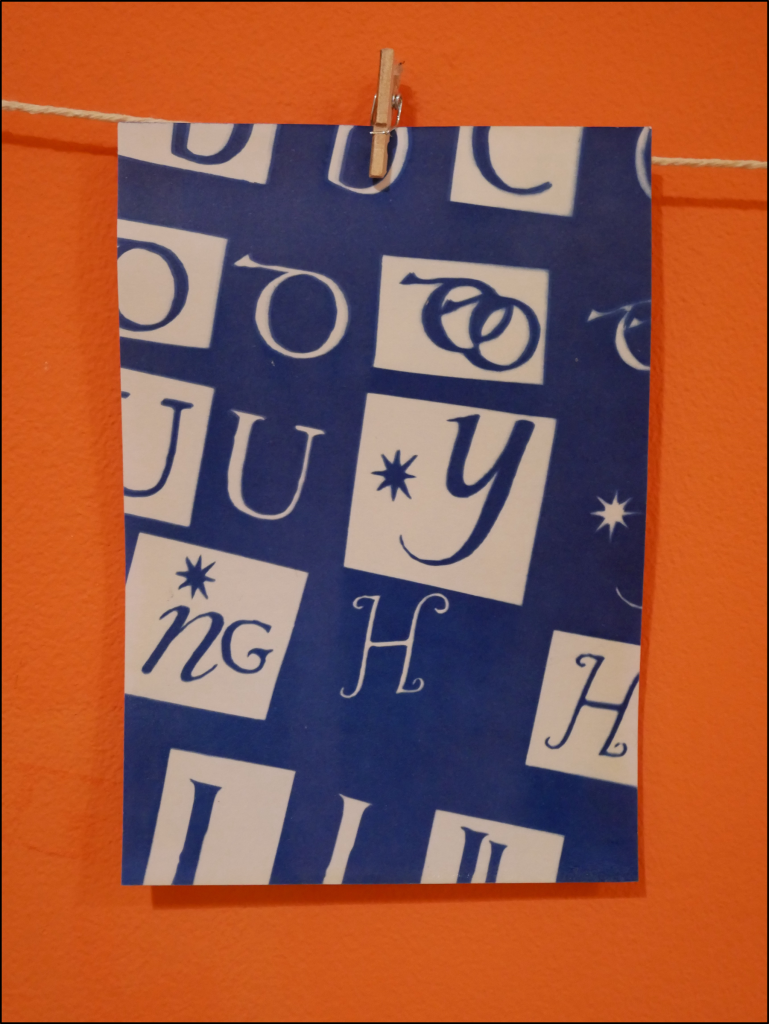
The results!
With the Eisteddfod fast approaching, I will be continuing my experimentation for the next few weeks, seeing how the process can be pushed even further. This will include experimenting with different processes and methods, in addition to further studying Jonah Jones’ vast and expansive body of work for inspiration! I look forward to facilitating participants’ engagement with Jonah Jones’ legacy. I hope that, with my support and guidance, his work sparks ideas, imagination and experimentation for each person taking part – just as it has for me!
Workshops
Adults:
Monday 4th August 13:30
Families/children with adult:
Thursday 7th August 12:00
Adults:
Friday 8th August 14:00
at Y Lle Celf